What we actually do.
-

Therapy
Our 1:1 support takes an integrated approach to health and performance — a holistic style of therapy that combines different models, evidence-based techniques and supportive practices (like breath work and movement) that are just right for you. In other words, we personalise the approach so that it works for you.
Our focus is on building deep and open client-therapist connections, with a focus on collaboration throughout our time together. This allows for a balanced and equal relationship inside the therapy room, supporting you to know yourself and your own needs more intimately outside of it.
The objective is to optimise health and performance by targeting key body systems and correcting ingrained imbalances.
We pay specific attention to the nervous and breathing systems, supporting pattern recognition within emotions, thoughts, and behaviours, focusing on intercepting and managing stress, and utilising tools such as exercise and training development, as well as breath work.
You’ll learn to understand the underlying mechanisms at play, before acquiring and applying new skills in practical scenarios to lock in the knowledge.
-

Breathwork
At embdhealth, we have a unique systems-based approach to health, understanding that nothing in the body works independently.
We incorporate assessment of your biomechanics, physiology, and nervous system, to support individual awareness of how our breathing system influences our psychoemotional state. Practical tools and strategies are provided to support individuals in issues such as managing pain, anxiety, and stress, and assist in discovering balance within their bodies.
At embdhealth, we use evidence-based techniques to support clients in better managing the various systems within their body. Our nervous system influences the way we breathe, and the way we breathe influences our nervous system. In other words, breathe better to feel better.
-
Movement
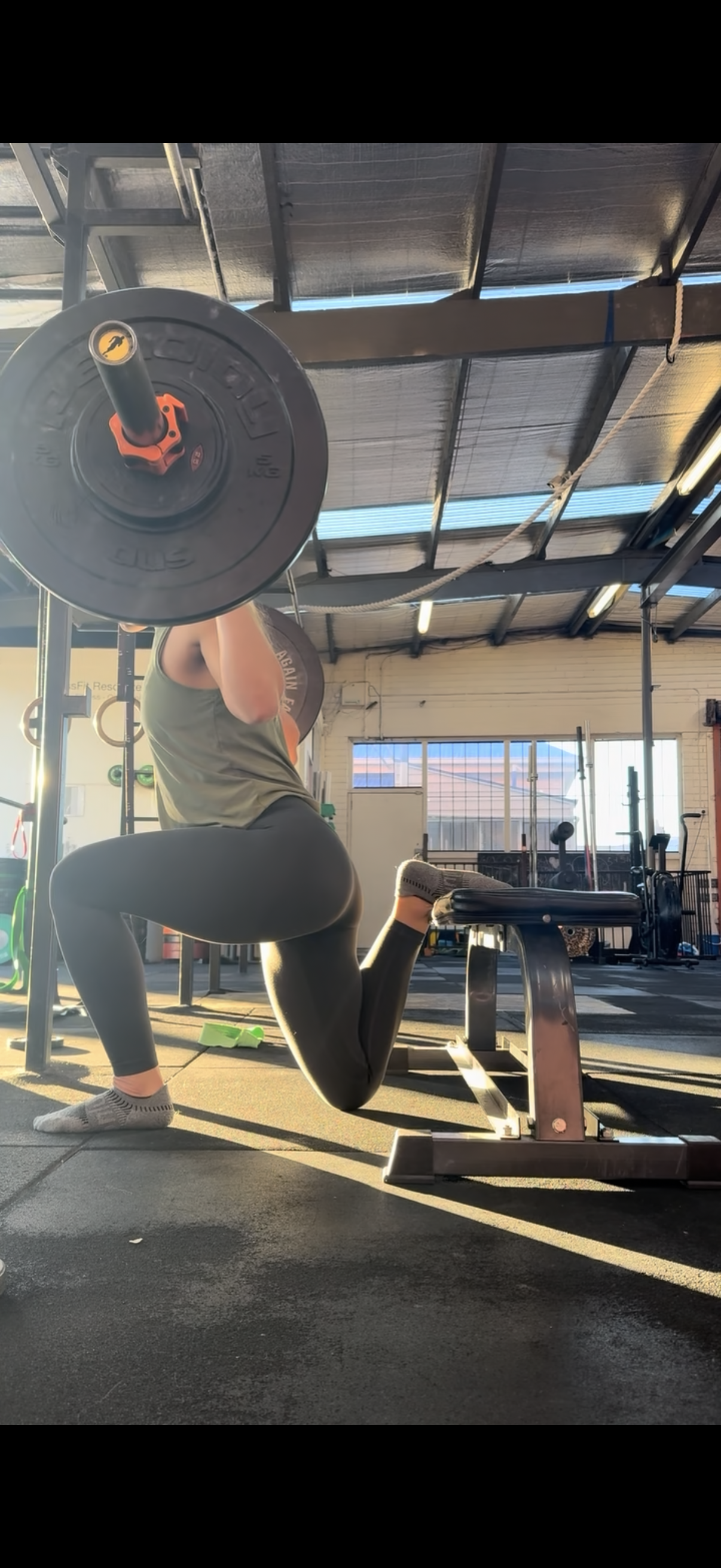
Movement at embdhealth is built around one idea: that the body and the nervous system are the same system, and training one without the other only gets you so far. Whether that looks like strength and conditioning — learning to breathe under load, build capacity, and tolerate stress without breaking — or Yin yoga, where long holds and deliberate stillness teach the nervous system that it can stay present without needing to escape — the goal is always the same. To help you feel genuinely good in your body, not just in a training block or a good season, but across the long arc of your life. This is sustainable performance: movement that evolves with you, honours where you are, and builds something that lasts.
If you have been doing all the right things and still feel like something is missing — if you are strong but wired, or calm on the mat but overwhelmed everywhere else — this is the work that bridges that gap. It is not about doing more. It is about finally having someone who understands both sides of you: the part that wants to train hard and the part that needs to come back down. Movement here is not a prescription. It is a practice you can keep, through every season of your life.
FAQs
-
We like to make starting out simple. If you’d like to book a free 15-minute introductory call, simply click the ‘contact us’ button so we can organise a time.
If you are ready to dive right in, please reach out via the contact page and we will be in touch to schedule your first session.
-
The first step will be for you and your therapist to get to know each other. A good therapeutic relationship is important for therapy to be supportive and so is something we prioritise. From here, you and your therapist will work together to figure out your goals and discuss the best ways of achieving them - we take a strengths based approach, focusing on and supporting your abilities, knowledge, and capacities.
As you continue, your therapy sessions will become a space for reflection, providing you with clarity, and a sense of feeling heard, held, and understood. Your therapist will help you to see what might be out of your view. They will listen, facilitating your safe offloading and exploration
There are hundreds of different therapeutic models. At embd, we take an integrative, mindbody, and action based approach, ensuring we tailor our mode of practice to your needs.
-
Sessions are 50 minutes in length and currently cost $220 inc. GST. If you have a Mental Health Care Plan or Private Health Care, you can claim a portion of this cost back.
-
The number of sessions you need, or choose, will depend entirely on your individual circumstances. Those interested in deeper introspection or working through various complexities or traumas may be interested in, and often benefit from, longer term therapy.
Together we will assess your needs and situation, and decide on what will work best for you. For some people a body of work on specific issues can range from 10-18 sessions. For others who have multiple issues, complexities or interwoven concerns, a therapy commitment can range from 26-52 sessions.
-
The frequency of sessions you need, or choose, will depend entirely on your individual circumstances. Therapy is most effective when it is regular and consistent. Typically, sessions occur weekly or fortnightly, especially at the beginning. Some people might choose to decrease in frequency as they move through their therapeutic journey down to monthly and then ad-hoc.
-
Therapy sessions are one-on-one, 50-minute appointments focused on psychological support — working through patterns, stress, anxiety, trauma, identity, or performance. Movement and breathwork sessions sit alongside this, either as a complement to therapy or as standalone offerings. They are more skills and body-based — learning to train with nervous system awareness, use breath as a regulation tool, or explore Yin yoga as a somatic practice. Some clients work across all three. Others start with one and find their way into the others. There is no right order.
-
No. Many clients come with a specific diagnosis or mental health history, and that is absolutely welcome here. But many others come because they are high-functioning and quietly stretched — performing well on the outside but not feeling well on the inside. If you are an athlete, a health professional, a first responder, or someone navigating pregnancy or postpartum, you do not need a diagnosis to benefit from this work. You just need to want to feel better in your body and your life.
-
Yes, and it is a particular area of passion. Whether you are pre-conception, pregnant, or within the first 12 months postpartum, support is available for the psychological and physical experience of that season — including anxiety, identity shifts, birth preparation, postpartum recovery, and navigating movement safely across each stage. All services can be adapted to where you are in your perinatal journey.
-
Yes. All movement programming is adapted to your individual stage, capacity, and any relevant medical considerations. Pregnancy and postpartum are not contraindications to movement — they are simply seasons that require a more informed approach. Sessions are designed to meet you where you are, not where you were before.
-
Sessions begin with an assessment of your current breathing patterns — how you breathe at rest, under load, and under stress. From there, practical techniques are introduced to help you shift your nervous system state, manage pain or anxiety, improve recovery, and build a more efficient breathing system over time. You will leave with tools you can use immediately, not just in sessions. No prior breathwork experience is needed.
-
Yes. Therapy and breathwork sessions are available fully online, worldwide. Movement sessions and the Calm Under Pressure workshop are available face-to-face in Hobart, Tasmania. If you are not local, reach out and we can discuss what is available to you remotely.
-
Yes, if you have a Mental Health Care Plan (MHCP) from your GP, you are eligible for a Medicare rebate on therapy sessions. Private health insurance may also cover a portion depending on your level of cover. Sessions are $220 inc. GST, with a rebate applicable when a valid MHCP is in place. If you are unsure whether you qualify, your GP is the best first point of contact.
-
Start with a free 15-minute introductory call. There is no pressure and no commitment — it is simply a conversation to understand where you are and whether this is the right fit. From there, a recommendation will be made based on what would be most useful for you right now.